
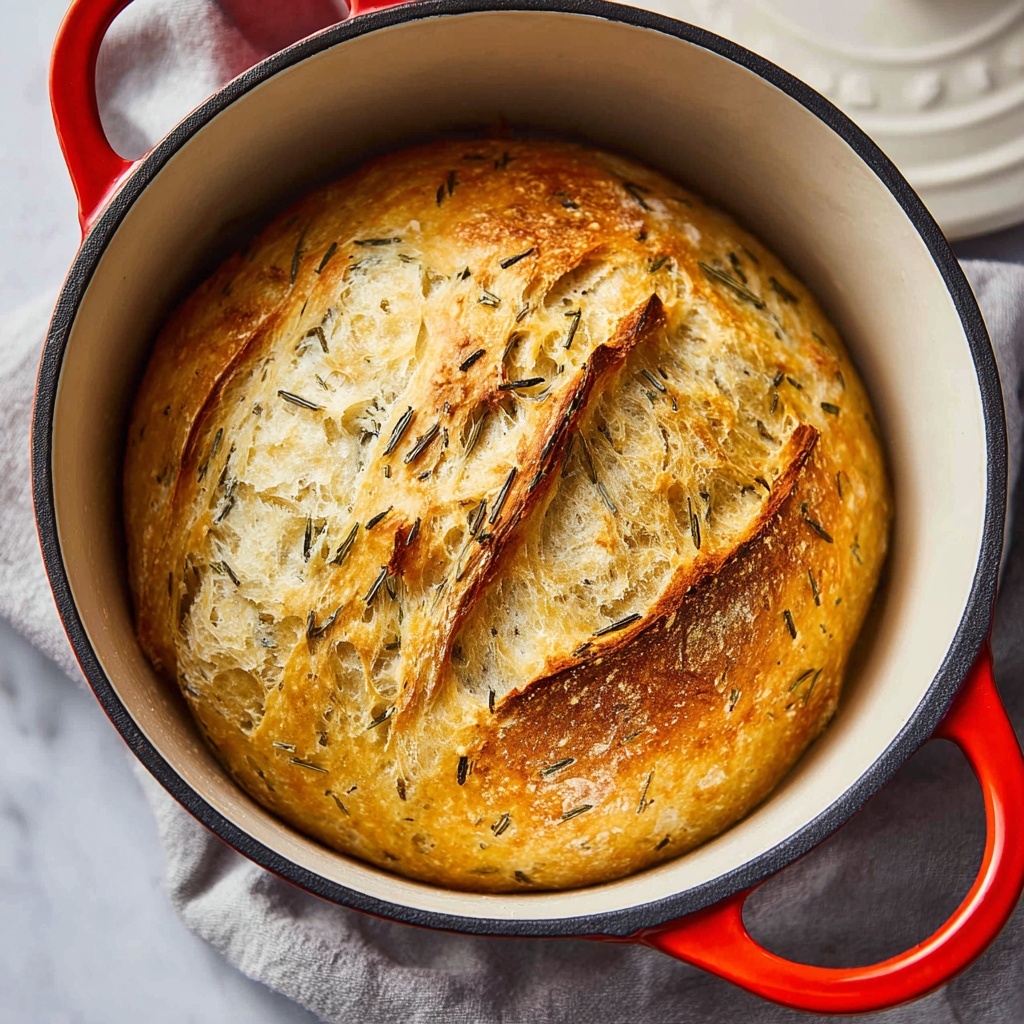
If you’ve ever wanted to bake your own bread but felt intimidated by the process, this No Knead Rosemary Dutch Oven Bread Recipe is your new best friend. It takes just a handful of simple ingredients, requires almost no hands-on effort, and rewards you with a crusty, golden loaf infused with fragrant rosemary that tastes like it came straight from a gourmet bakery. The beauty of this recipe lies in its simplicity combined with the magic of slow fermentation, producing a loaf with amazing texture, flavor, and aroma that fills your kitchen with warmth and joy.

Ingredients You’ll Need
Gathering the right ingredients is the first step to your perfect loaf. Each one plays an essential role in flavor, texture, and that irresistible crust you’ll love biting into.
- All-purpose flour (3 cups / 360g): The base for our bread, providing structure and a tender crumb.
- Sea salt (1¾ tsp / 9g): Enhances flavor and balances the natural sweetness of the flour.
- Fresh rosemary leaves (¾ cup / 22g, chopped): Adds a wonderfully aromatic, herby note—dried rosemary works too!
- Active dry yeast (½ tsp / 2g): Just enough to give the dough a slow rise, developing depth in flavor.
- Water (1½ cups / 341g, room temperature): Hydrates the flour and activates the yeast, creating our soft, pliable dough.
How to Make No Knead Rosemary Dutch Oven Bread Recipe
Step 1: Combine Your Ingredients
Start by mixing the flour, sea salt, chopped rosemary, and yeast in a large bowl. Pour in the water and stir with a spatula until everything is blended into a shaggy dough. Don’t worry about kneading—this recipe’s charm is all about letting the ingredients do their own thing.
Step 2: Let the Dough Rest Overnight
Cover your bowl with plastic wrap or a damp towel and leave it on the counter for at least 12 hours. This long, slow rise is the secret to developing the bread’s deep flavor and airy texture. Trust me, the wait is worth every second.
Step 3: Preheat Your Dutch Oven
About 30 minutes before baking, preheat your oven to 450°F and place your empty Dutch oven with its lid inside to heat up. This step simulates a professional steam oven, ensuring your bread gets that perfect crust.
Step 4: Form the Dough Ball
When the oven and Dutch oven are scorching hot, carefully take out the pot using oven mitts. Sprinkle a clean surface and your hands with flour, then gently scoop the dough out. Fold it a couple of times to shape a rough ball—remember, no kneading needed—and place it straight into the hot Dutch oven.
Step 5: Bake Your Bread to Golden Perfection
Pop the lid back on the Dutch oven and bake for 30 minutes. Then remove the lid and continue baking for another 15 to 20 minutes. Keep an eye on that beautiful crust developing, aiming for a deep golden brown.
Step 6: Check, Cool, and Enjoy
Your loaf is ready when it sounds hollow tapped on the bottom and has an internal temperature between 195°F and 210°F. Remove the bread gently from the Dutch oven and place it on a cooling rack. Let it cool for at least 30 minutes before slicing to ensure the crumb sets just right.
How to Serve No Knead Rosemary Dutch Oven Bread Recipe
Garnishes
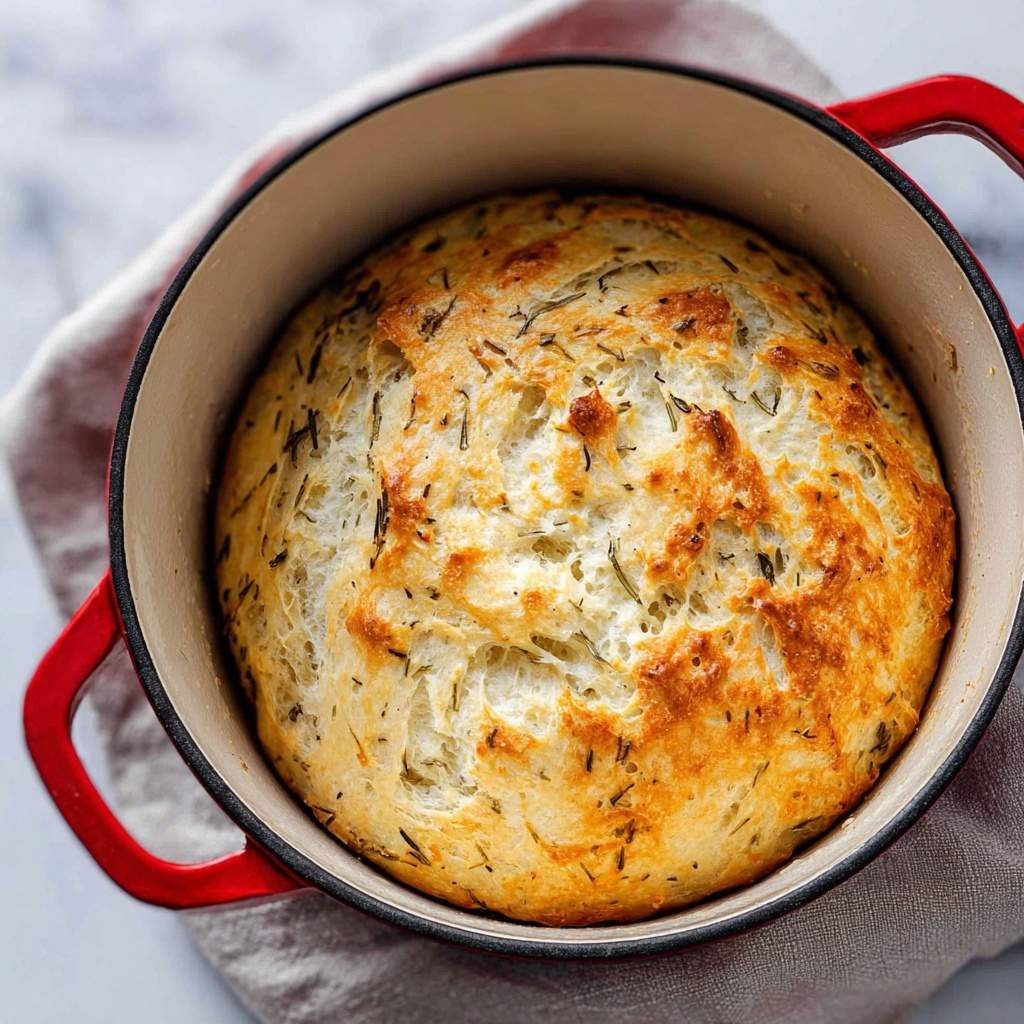
This bread speaks for itself but pairing it with a drizzle of extra virgin olive oil, a sprinkle of flaky sea salt, or a smear of soft herb butter takes it to the next level. You can even toss fresh rosemary leaves on top of your butter for an extra fragrant touch.
Side Dishes
Perfect alongside a bowl of warm soup like tomato basil or roasted garlic, this rosemary bread also pairs beautifully with cheeses, charcuterie, or a fresh salad. The crusty exterior and soft inside make it a versatile companion at any meal.
Creative Ways to Present
Turn slices into toasted crostini topped with ricotta and honey, bruschetta with ripe tomatoes and basil, or even thick slices dipped in homemade spinach artichoke dip. The hearty rosemary flavor elevates simple dishes, making entertaining effortless and impressive.
Make Ahead and Storage
Storing Leftovers
Wrap your leftover rosemary bread tightly in plastic wrap or place it in an airtight container to keep it fresh at room temperature. It usually lasts up to two days without losing too much of its texture or flavor.
Freezing
If you want to enjoy this delightful bread later, slice it before freezing and store the slices in a freezer-safe bag. Thaw at room temperature or toast slices directly from the freezer to revive that fresh-baked quality.
Reheating
To refresh your bread’s crust and warmth, pop slices in a toaster or heat the whole loaf in a preheated 350°F oven for about 10 minutes. This little step brings back that freshly baked feel you love.
FAQs
Can I use dried rosemary instead of fresh?
Absolutely! While fresh rosemary offers the brightest flavor, 2 to 4 tablespoons of dried rosemary works just fine. Just make sure to chop it finely so the flavor infuses evenly throughout the bread.
Do I need a Dutch oven specifically for this recipe?
A Dutch oven is highly recommended because its tight-fitting lid traps steam, which helps create a crisp crust and tender crumb. If you don’t have one, you can mimic this by baking your bread in a covered roasting pan or using a large oven-safe pot with a lid.
Can I make this bread without rosemary?
Definitely! The rosemary adds a lovely herbal note, but you can omit it for a plain no-knead bread or experiment with other herbs and add-ins like thyme, garlic, or sun-dried tomatoes for different flavors.
Why does the recipe require such a long resting time?
The long, overnight fermentation allows the yeast to slowly work, which develops complex flavors and a light, airy texture without needing to knead. It also helps improve the bread’s shelf life and crust.
How do I know when the bread is fully baked?
Aside from the golden-brown crust, a great way to check is by tapping the bottom of the loaf—it should sound hollow. Using a kitchen thermometer to confirm the internal temperature between 195°F and 210°F guarantees it’s perfectly baked.
Final Thoughts
Baking this No Knead Rosemary Dutch Oven Bread Recipe is like inviting a little magic into your kitchen. Its simplicity means anyone can create bakery-worthy bread without fuss, and the rosemary adds an unforgettable flavor that elevates every bite. So go ahead, try this recipe and savor the incredible joy of homemade bread fresh from your oven—your family and friends will thank you!