“`html
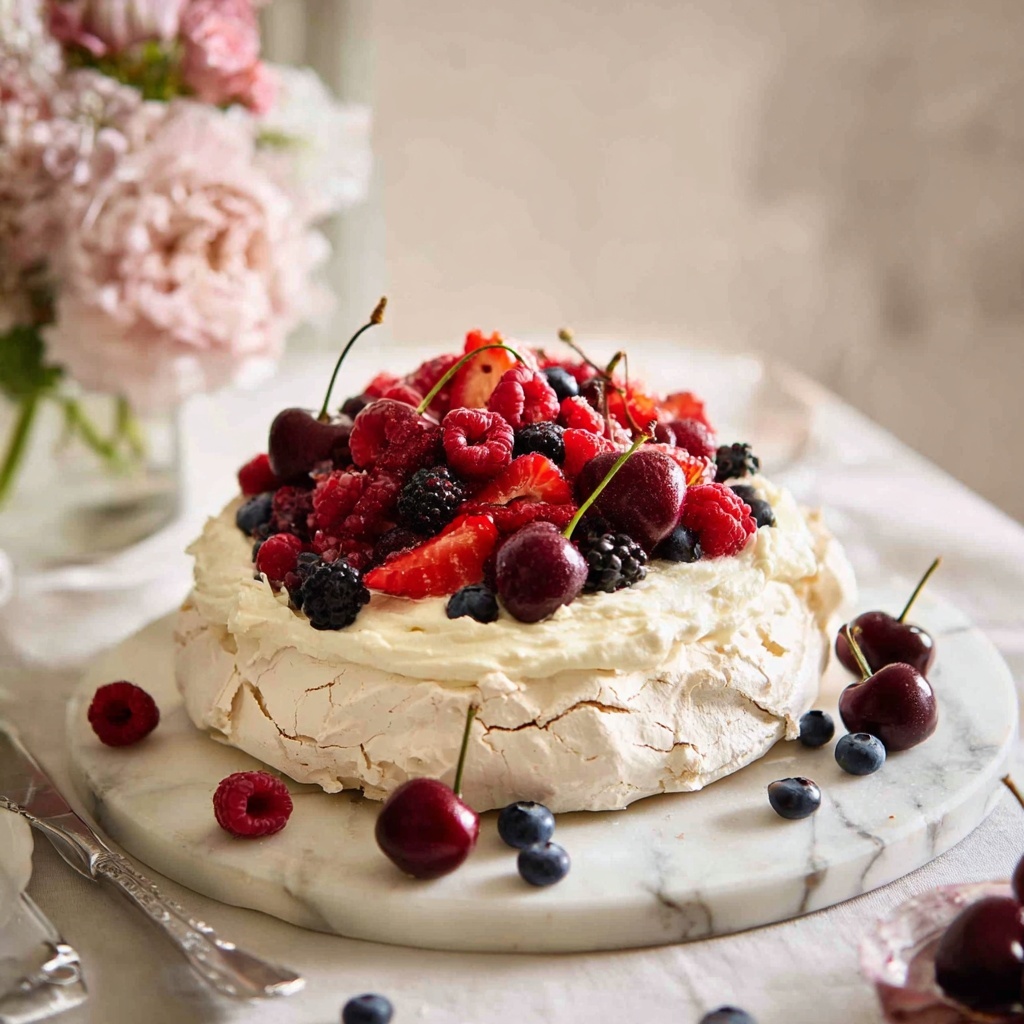
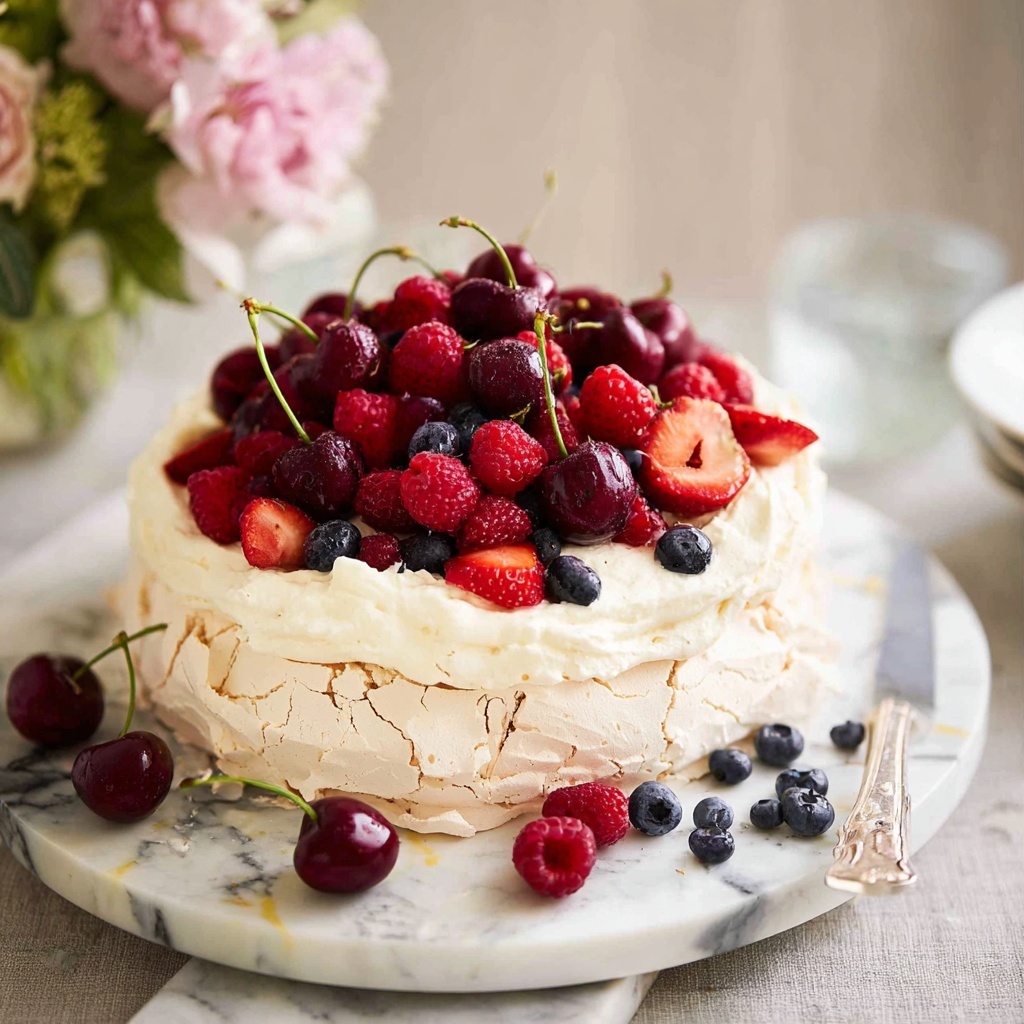
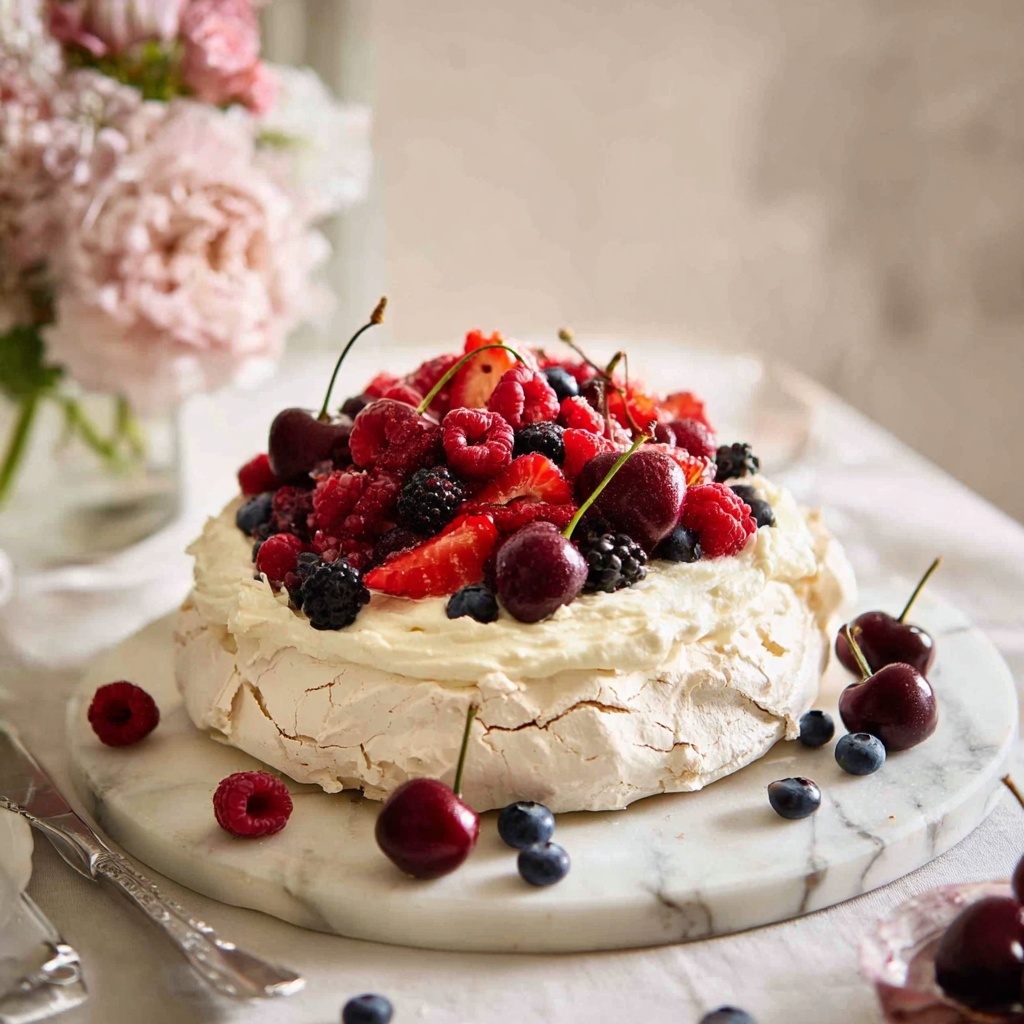
If you are craving a dessert that feels like a cloud of sweetness topped with vibrant bursts of fresh fruit, look no further than this Classic Pavlova with Fresh Berries Recipe. This stunning Australian treat combines a crisp, crunchy shell with a soft, marshmallow-like center, crowned with fluffy whipped cream and a colorful medley of berries. It’s as delightful to behold as it is to devour, and making it is a joyful experience that brings a little celebration to any occasion.
Ingredients You’ll Need
The beauty of this Classic Pavlova with Fresh Berries Recipe lies in its simplicity. Using just a handful of everyday ingredients, each one plays a crucial role, from building the perfect meringue structure to adding luscious creaminess and rebellious, juicy bursts of berry freshness.
- Egg whites (150 ml / 5 oz): The foundation of the meringue, they create that airy texture when whipped to soft peaks.
- Caster sugar (1 cup): Adds sweetness and helps stabilize the meringue, giving it a glossy finish.
- Cornflour (1 tbsp): Keeps the meringue soft inside while crisping the outside.
- White vinegar (1 tsp): Helps with stability and gives the meringue lift and structure.
- Thickened cream (1 1/2 cups): Provides richness and fluffy topping when whipped.
- Caster sugar (1/4 cup): Sweetens the whipped cream beautifully without overpowering.
- Vanilla extract (1 tsp): Adds a warm, comforting flavor to the cream.
- Fresh berries: Raspberries, blueberries, strawberries, and cherries add color, tang, and freshness — an essential contrast to the sweet meringue.
How to Make Classic Pavlova with Fresh Berries Recipe
Step 1: Prepare the Egg Whites
Start by separating the egg whites while the eggs are cold and measuring about 150 ml (just shy of 2/3 cup). It’s important to let the whites come up to room temperature; this little tip helps you achieve maximum volume when whipping your meringue.
Step 2: Preheat Your Oven
While your egg whites rest, preheat the oven to 170°C (340°F), or 180°C if you’re using a fan-forced oven. Having the oven ready ensures your meringue bakes evenly and maintains that perfect texture.
Step 3: Whip to Soft Peaks
Using a stand mixer or handheld beater, beat the egg whites on a medium-high speed until soft peaks form. Soft peaks mean the whites hold their shape but have a slight curl at the tip — this is your starting point before sweetening the meringue.
Step 4: Gradually Add Sugar
Add your caster sugar one tablespoon at a time while continuing to beat. This slow incorporation helps the sugar dissolve fully, ensuring a glossy and stable meringue. Take your time here; patience pays off.
Step 5: Achieve the Perfect Gloss
Once all the sugar is added, keep beating for about three more minutes until the meringue is thick, glossy, and smooth. To check readiness, rub a little between your fingers — it should feel silky with no graininess from undissolved sugar.
Step 6: Fold in Cornflour and Vinegar
Add the sifted cornflour and white vinegar, folding them gently through the meringue to maintain all that airy volume. These ingredients work magic by balancing crispness on the outside and softness inside, with extra stability.
Step 7: Shape and Bake
Line a baking tray with parchment paper and spoon the meringue mixture onto it, shaping into a thick disk with slightly raised edges to hold the cream and fruit. Bake low and slow for about 90 minutes until crisp on the outside but with a soft, marshmallow texture inside. Then turn off the oven and let the pavlova cool inside with the door slightly open — this gradual cooling prevents cracks.
How to Serve Classic Pavlova with Fresh Berries Recipe
Garnishes
The real star of the presentation is your fresh berries — scatter them generously all over the whipped cream topping for a vibrant, inviting look. Adding a few mint leaves or a dusting of powdered sugar can elevate the dish’s appeal even more.
Side Dishes
Classic Pavlova with Fresh Berries Recipe shines on its own, but pairing it with a light dessert wine, like a Moscato, or a cup of freshly brewed coffee can complement the sweetness impeccably. A small bowl of lemon curd on the side also adds a lovely zing.
Creative Ways to Present
For a twist, serve in individual glass parfaits layered with meringue pieces, cream, and berries, making it easier to enjoy and visually stunning. You can also try topping with exotic fruits like passionfruit or kiwi for an adventurous flair.
Make Ahead and Storage
Storing Leftovers
Store leftover pavlova in an airtight container at room temperature for up to 1 day. Keep the cream and fruit separate until serving to prevent sogginess. The meringue shell loses its crispness quickly once assembled, so it’s best enjoyed fresh.
Freezing
You can freeze the unbaked meringue shell by shaping it and freezing on the tray, then placing it in a zip-lock bag. Freeze for up to 1 month. When ready, bake from frozen, adjusting baking time slightly to account for the chill.
Reheating
Traditional reheating is not recommended since pavlova’s charm is its crisp exterior and soft inside, which change texture with heat. If your shell is slightly stale, a quick warm oven blast at low heat (around 120°C / 250°F) for 5-10 minutes can revive a bit of crispness before adding cream and fruit.
FAQs
Can I use regular sugar instead of caster sugar?
Caster sugar is preferred because its fine texture dissolves more easily, creating a smoother meringue, but you can pulse regular granulated sugar in a blender a few times to make it finer if needed.
Why is my meringue sticky or weeping?
Sticky or weeping meringue usually happens when sugar isn’t fully dissolved or baking temperatures aren’t consistent. Make sure to add sugar slowly and check for a smooth texture before baking low and slow.
Can I use frozen berries?
Fresh berries are ideal for topping Classic Pavlova with Fresh Berries Recipe because frozen berries release extra moisture which can sog the meringue. If you must use frozen, thaw and drain them well first.
Why does my pavlova crack?
Cracks can develop if the oven temperature is too hot or if the pavlova cools too quickly. Turning off the oven and letting the pavlova cool inside slowly helps prevent cracks and keeps the texture perfect.
Is a Pavlova gluten-free?
Yes! This Classic Pavlova with Fresh Berries Recipe is naturally gluten-free since it’s made from egg whites, sugar, and cornflour (which is gluten-free corn starch), making it a fantastic dessert option for gluten-sensitive guests.
Final Thoughts
There’s something effortlessly magical about the Classic Pavlova with Fresh Berries Recipe that never fails to impress. Its glorious textures and vibrant colors bring both joy to the eyes and delight to the palate. Whether it’s a special occasion or a weekend treat, make this pavlova your go-to dessert and watch it become the sweet highlight of your kitchen adventures.
“`