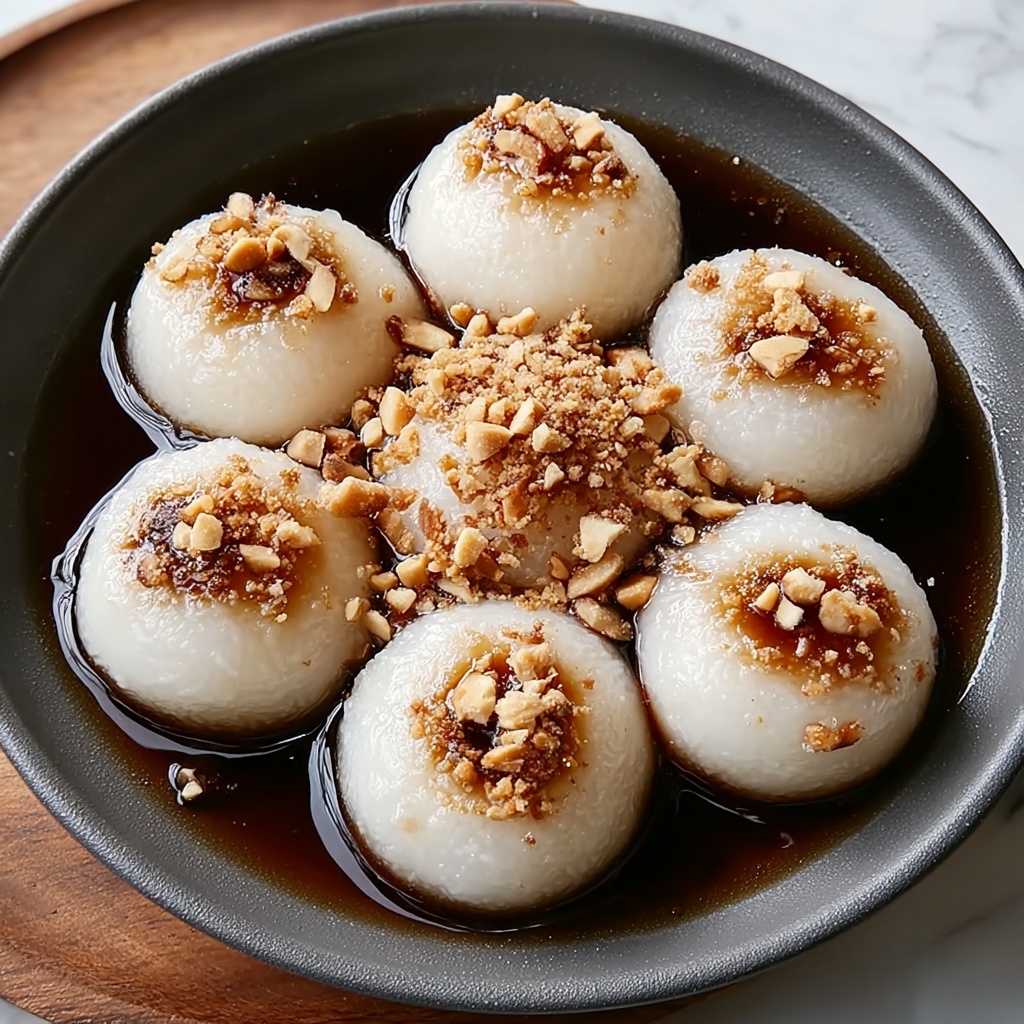
If you have a sweet tooth and a love for chewy, delightful treats, this Shiratama Dango (Japanese Rice Dumplings) Recipe is sure to win your heart. These soft, pillowy dumplings boast a perfect balance of subtle sweetness and satisfyingly bouncy texture. Made from glutinous rice flour, they are incredibly fun to make and even more enjoyable to eat. Whether you’re serving them with classic kuromitsu syrup and kinako powder or experimenting with modern twists, these Japanese rice dumplings bring a touch of traditional charm to any dessert table.
Ingredients You’ll Need
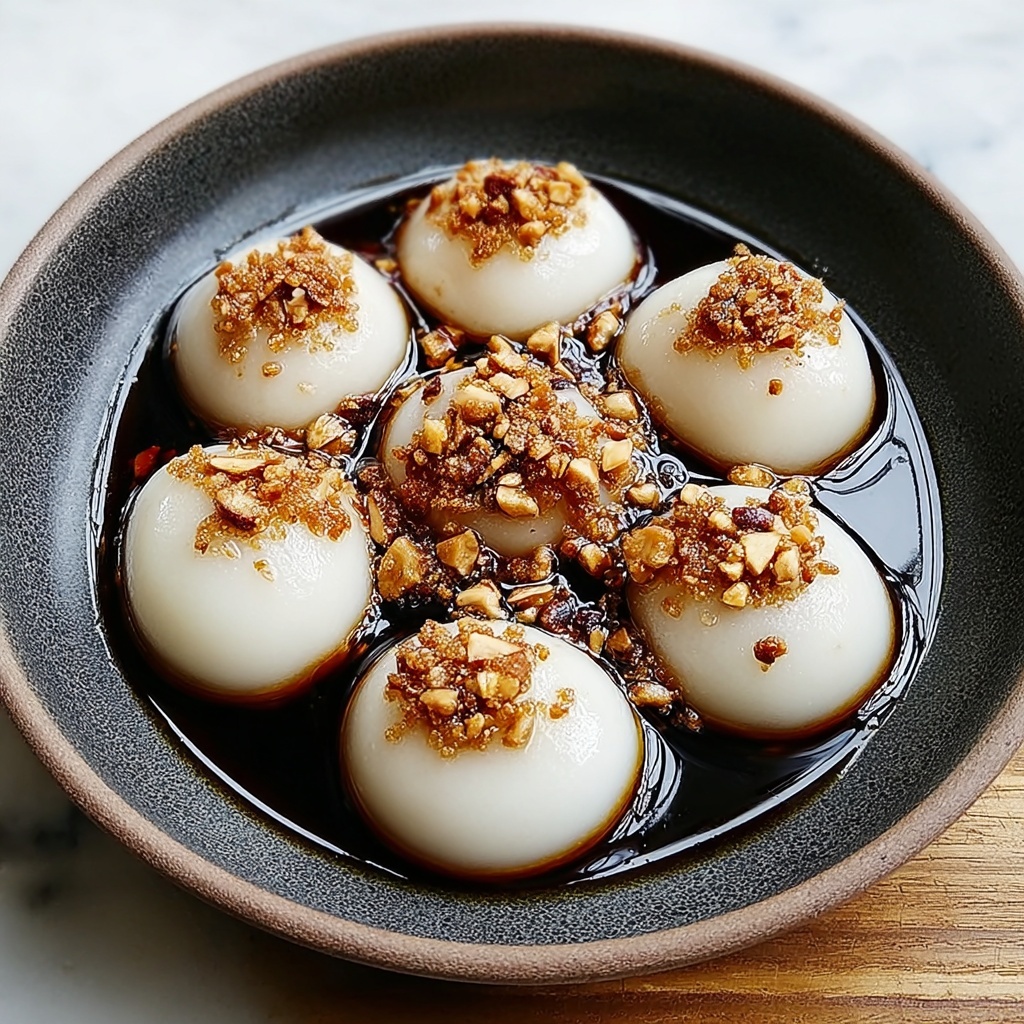
To create these irresistible Japanese rice dumplings, you only need a handful of simple ingredients. Each one plays a special role in giving the dumplings their trademark texture, flavor, and look.
- Glutinous rice flour (shiratamako): This is the magic ingredient that gives the dumplings their soft and chewy texture.
- Water: Used to bind the flour into a smooth, pliable dough, with careful measurement to get just the right consistency.
- Glutinous rice flour (mochiko): Often mixed with potato starch to enhance elasticity and create a glossy finish.
- Potato starch (katakuriko) or tapioca starch: Adds a delicate springiness to the mochi balls, preventing them from being too dense.
- Dark brown sugar syrup (kuromitsu): A rich, caramel-like syrup perfect for drizzling over the dumplings for a luxuriously sweet finish.
- Roasted soybean powder (kinako): Adds a nutty depth and amazing aroma, making every bite more complex and enjoyable.
How to Make Shiratama Dango (Japanese Rice Dumplings) Recipe
Step 1: Preparing the Dough
Start by combining 100 grams of glutinous rice flour (shiratamako) in a mixing bowl. Gradually whisk in about 90 milliliters of water until a smooth, supple dough forms. For the mochi variation, mix 90 grams of mochiko with 10 grams of potato starch, then add approximately 80 milliliters of water. The dough should hold together without being sticky or crumbly—adjust water slightly if needed. This simple step sets the foundation for wonderfully chewy dumplings.
Step 2: Shaping the Dumplings
Divide the dough into cylinders and cut into small, equally sized pieces. Roll each piece between your hands to form a smooth ball. To add a charming traditional touch, gently press a small dent in the center of each ball—this also helps the dough cook through evenly. The shaping process is as fun as it is satisfying, and soon your kitchen will be filled with anticipation.
Step 3: Cooking the Dumplings
Bring a pot of water to a rolling boil. Using chopsticks or a slotted spoon, carefully drop the dumplings into the boiling water to prevent them from sticking together. Watch closely as they cook; the dumplings will float to the surface in about three minutes, signaling that they are perfectly cooked. This simple visual cue takes the guesswork out of cooking time.
Step 4: Cooling and Serving
Once cooked, transfer the dumplings immediately into a bowl of ice-cold water to cool. This shocks them and halts the cooking process, giving the dumplings a delightful bounce and preventing them from sticking together as they cool. After they’ve chilled, drain and get ready to serve them up with your favorite toppings.
How to Serve Shiratama Dango (Japanese Rice Dumplings) Recipe
Garnishes
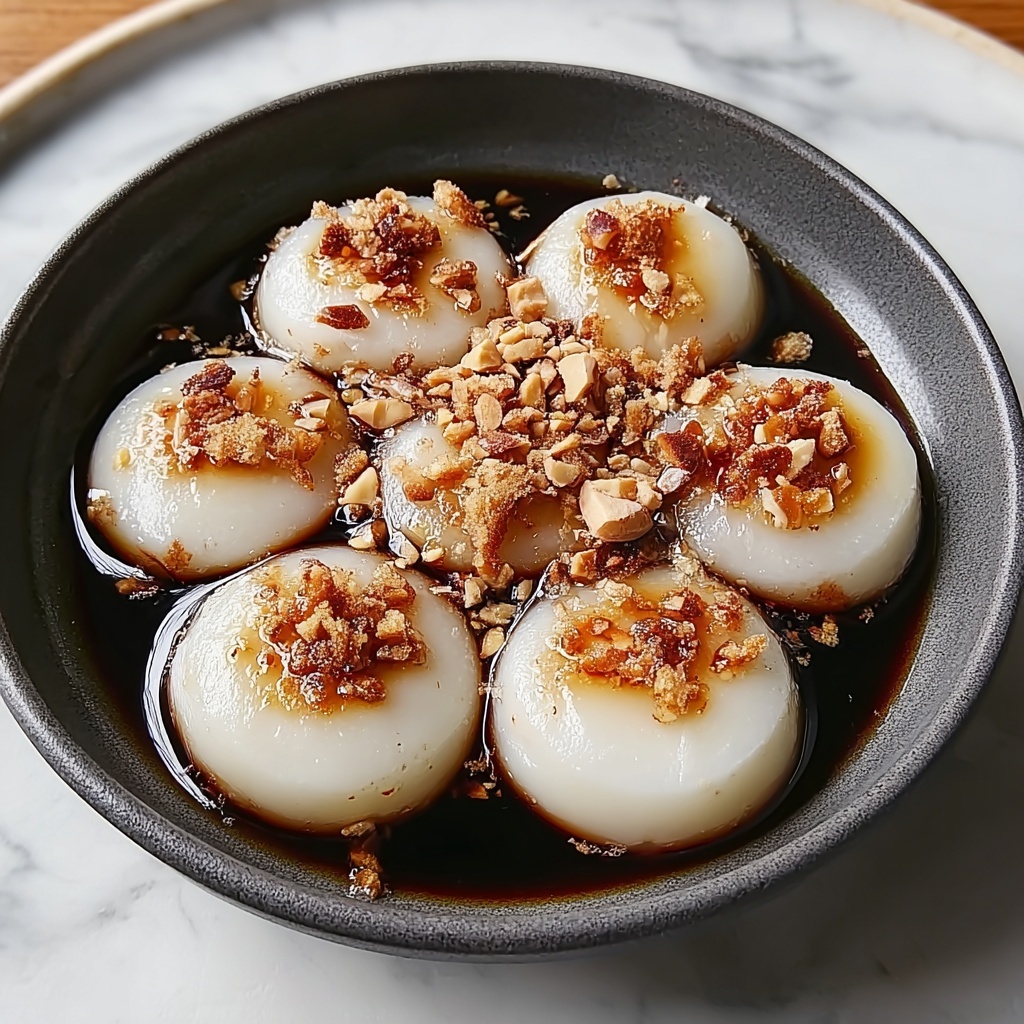
Classic Shiratama Dango shine when paired with the traditional favorites kuromitsu syrup and kinako powder. Drizzle a generous amount of dark brown sugar syrup over the dumplings for a lush sweetness, then dust with the roasted soybean powder. The kinako lends a toasty flavor and powdery texture that’s utterly addictive. These garnishes elevate the dumplings and offer contrasting tastes that highlight their mild rice flavor brilliantly.
Side Dishes
Serve these delightful rice dumplings alongside a bowl of fresh fruit like strawberries, mango, or even a scoop of creamy matcha ice cream. The coolness and tartness from the fruit balance perfectly with the chewy dumplings’ sweetness. For a more substantial treat, pair them with hot green tea to cleanse the palate and bring out the dessert’s nuanced textures.
Creative Ways to Present
Feeling adventurous? Skewer the dumplings onto bamboo sticks and lightly toast them over an open flame to add a hint of smokiness. Alternatively, layer them in a parfait glass with sweet red bean paste, whipped cream, and a sprinkle of toasted sesame seeds for a stunning dessert presentation. The Shiratama Dango (Japanese Rice Dumplings) Recipe is a playground for creativity, so don’t hesitate to experiment with colors, shapes, and flavor pairings.
Make Ahead and Storage
Storing Leftovers
The cooked dumplings can be stored in an airtight container in the refrigerator for up to two days. To prevent them from sticking, lightly coat them with cornstarch or dusted potato starch before storing. Keep in mind they are best enjoyed fresh, as refrigeration may slightly toughen the texture.
Freezing
For longer storage, you can freeze the dumplings on a parchment-lined tray until firm, then transfer them into a freezer-safe bag. This method keeps them separate and prevents clumping. When you’re ready to enjoy them, thaw briefly at room temperature or gently reheat in hot water.
Reheating
To bring the dumplings back to their original chewiness, briefly dip them in boiling water until warmed through. Avoid microwaving, as this could cause uneven heating and alter the texture. After reheating, serve immediately with your favorite syrup and toppings.
FAQs
What is the difference between shiratamako and mochiko?
Shiratamako is a type of glutinous rice flour that produces softer, more elastic dumplings, while mochiko tends to create denser, chewier textures. Shiratamako is preferred for making traditional Shiratama Dango due to its powdery consistency and silky finish.
Can I use regular rice flour to make these dumplings?
Regular rice flour does not have the same sticky properties as glutinous rice flour, so it will not yield the chewy texture characteristic of Shiratama Dango. For best results, stick to shiratamako or mochiko.
How do I prevent the dumplings from sticking while cooking?
Make sure to stir gently when adding the dumplings to the boiling water and use chopsticks or a slotted spoon to separate them. After cooking, quickly transferring them to ice water helps prevent sticking as well.
Is Shiratama Dango gluten-free?
Yes, Shiratama Dango is naturally gluten-free since it is made from glutinous rice flour, which contains no wheat. This makes it a great dessert option for those with gluten sensitivities.
Can I flavor the dough before cooking?
Absolutely! You can add subtle flavors like matcha powder, cocoa, or fruit purees to the dough to create colorful and tasty variations. Just keep the added ingredients minimal to maintain the right dough consistency.
Final Thoughts
Making Shiratama Dango is like returning to a warm, comforting tradition filled with simple ingredients and heartfelt enjoyment. This Shiratama Dango (Japanese Rice Dumplings) Recipe offers not just a tasty treat, but a moment of joyful creativity and sharing. Whether you stick to the classic presentation or add your own inventive twist, each bite promises to be a delightful chewy escape. Give it a try—you’ll find it hard to stop at just one dumpling!
Print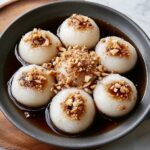
Shiratama Dango (Japanese Rice Dumplings) Recipe
- Prep Time: 15 minutes
- Cook Time: 5 minutes
- Total Time: 20 minutes
- Yield: 4 servings (approximately 12 dumplings)
- Category: Dessert
- Method: Boiling
- Cuisine: Japanese
- Diet: Gluten Free
Description
Shiratama Dango are traditional Japanese chewy rice dumplings made from glutinous rice flour, perfect as a delightful dessert. These soft mochi balls are boiled until they float and served with sweet kuromitsu syrup and nutty roasted soybean powder (kinako), offering a delightful combination of textures and flavors popular in Japanese cuisine.
Ingredients
Dango Dough
- 100 g glutinous rice flour (shiratamako)
- 90 ml water (approximate)
- 90 g glutinous rice flour (mochiko)
- 10 g potato starch (katakuriko) or tapioca starch
- 80 ml water (approximate)
For Serving
- Dark brown sugar syrup (kuromitsu)
- Roasted soybean powder (kinako)
Instructions
- Prepare Shiratama Dough: In a mixing bowl, combine 100 g of shiratamako (glutinous rice flour) and whisk briefly to aerate. Gradually add about 90 ml of water while mixing until a smooth, pliable dough forms that is not too sticky or dry.
- Prepare Mochiko Dough: In another bowl, mix 90 g of mochiko (glutinous rice flour) with 10 g of potato starch or tapioca starch. Slowly add approximately 80 ml water to create a similar pliable dough.
- Shape the Dumplings: Roll each dough into a cylindrical shape, then cut into small bite-sized pieces. Take each piece and roll into balls with your hands, then gently press a small dent into the center of each ball.
- Cook the Dumplings: Bring a pot of water to a rolling boil. Using chopsticks, carefully place the shaped dumplings into the boiling water to prevent sticking. Cook until the dumplings float to the surface, about 3 minutes, ensuring they are cooked through.
- Cool the Dumplings: Once cooked, transfer the dumplings immediately to a bowl of ice-cold water to cool and stop further cooking. Drain well before serving.
- Serve: Arrange the cooled dumplings on a serving dish and drizzle with dark brown sugar syrup (kuromitsu). Sprinkle roasted soybean powder (kinako) over the top for a nutty, complementary flavor.
Notes
- Adjust water quantity slightly to achieve a dough that is soft but not sticky.
- The dent pressed into each dumpling helps them cook evenly and adds an aesthetic touch.
- Use chopsticks to gently handle dumplings during boiling to prevent breaking.
- Kuromitsu syrup and kinako powder can be found in Asian grocery stores or homemade at home for authenticity.
- This recipe yields about 12 dumplings, enough for 4 servings.
- For a gluten-free dessert option, ensure all starches and flours are certified gluten-free.