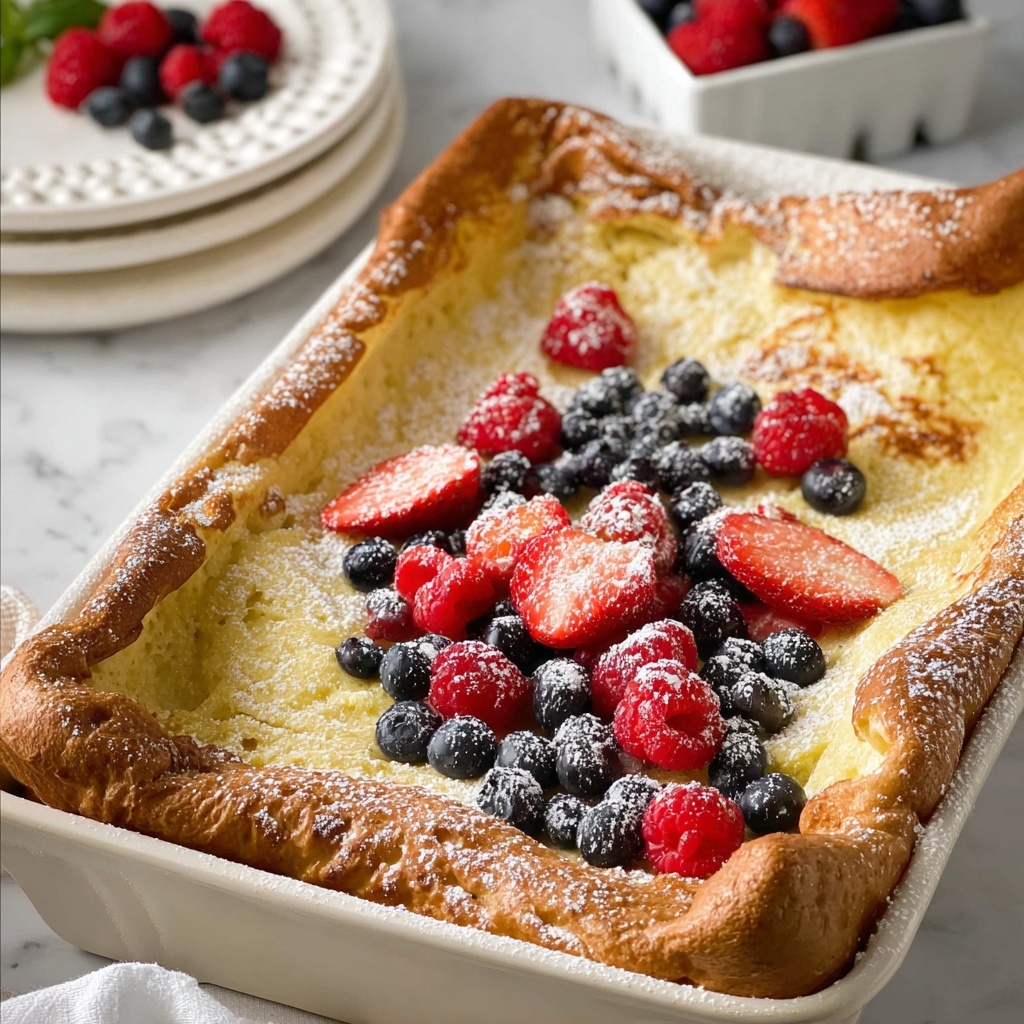
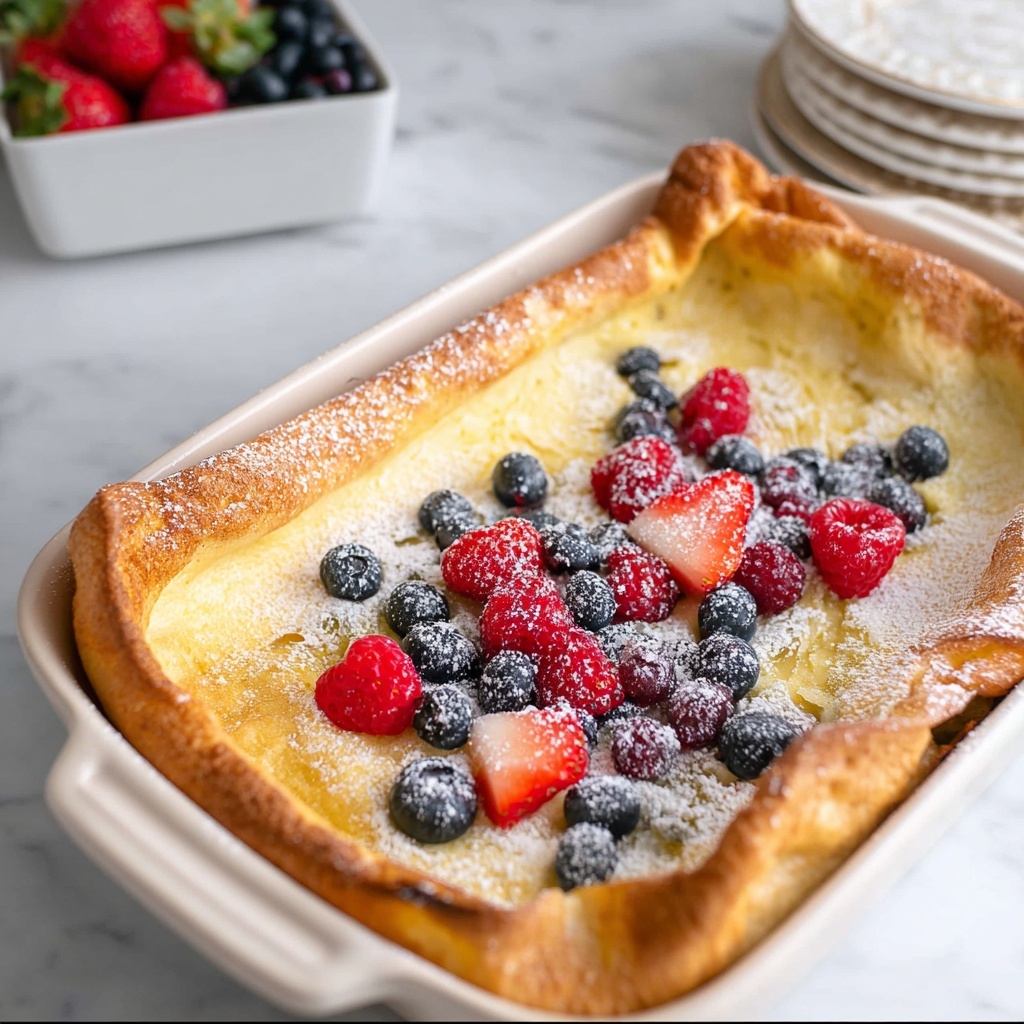
If you’ve ever wanted to wow your friends or family with a breakfast dish that’s as delightful as it is impressive, this German Pancakes Recipe is your new best friend. Picture a golden, puffed-up oven pancake with crispy edges and a tender, custardy center that melts in your mouth. It’s surprisingly simple to make but feels like such a special treat, perfect for leisurely weekend mornings or whenever you crave something sweet and comforting with a touch of European charm.
Ingredients You’ll Need
Don’t be fooled by the simplicity of these ingredients; each one plays a crucial role in creating the perfect texture and flavor for your German pancakes. From the fluffy eggs providing structure to the buttery richness and just the right hint of sweetness, these staples come together effortlessly.
- 6 large eggs: The heart of the recipe, eggs give the pancake its airy lift and custardy texture.
- 1 cup all-purpose flour: Adds just enough body to set the pancake while remaining tender.
- 1 cup milk: Keeps the batter smooth and adds moisture for that melt-in-your-mouth feel.
- 2 tablespoons sugar: Lightly sweetens the pancake without overpowering its delicate flavor.
- 1 teaspoon vanilla extract: Brings a warm, aromatic depth that makes the flavors pop.
- 1/2 teaspoon salt: Balances the sweetness and enhances the overall flavor.
- 4 tablespoons unsalted butter: Creates those irresistibly crisp edges and adds rich buttery goodness.
- Powdered sugar (for dusting): A classic finishing touch that adds a touch of elegance and sweetness.
- Fresh berries or maple syrup (optional): Perfect for adding freshness or a drizzle of sweetness, taking your German pancake experience to the next level.
How to Make German Pancakes Recipe
Step 1: Preheat the Oven
Begin by heating your oven to 425°F (220°C). This high heat is key to achieving that dramatic puff and golden color that make German pancakes so spectacular. Trust me, patience at this stage really pays off.
Step 2: Blend the Batter
In a blender, toss in the eggs, flour, milk, sugar, vanilla extract, and salt. Blend everything until silky smooth, making sure to scrape down the sides to combine all that goodness evenly. This smooth batter is the secret to a consistent puff and custardy center.
Step 3: Melt the Butter in the Baking Dish
Place your butter in a 9×13-inch casserole dish and slide it into the oven while it preheats. As the butter melts, it will sizzle and bubble, infusing your pancake with rich flavor and helping create those iconic crispy edges.
Step 4: Pour the Batter Over the Butter
Carefully remove the now hot casserole dish from the oven—this step requires a little caution! Immediately pour the smooth batter over the melted butter. The heat hitting the batter is what makes the magic happen, causing it to puff beautifully in the oven.
Step 5: Bake Until Puff and Golden
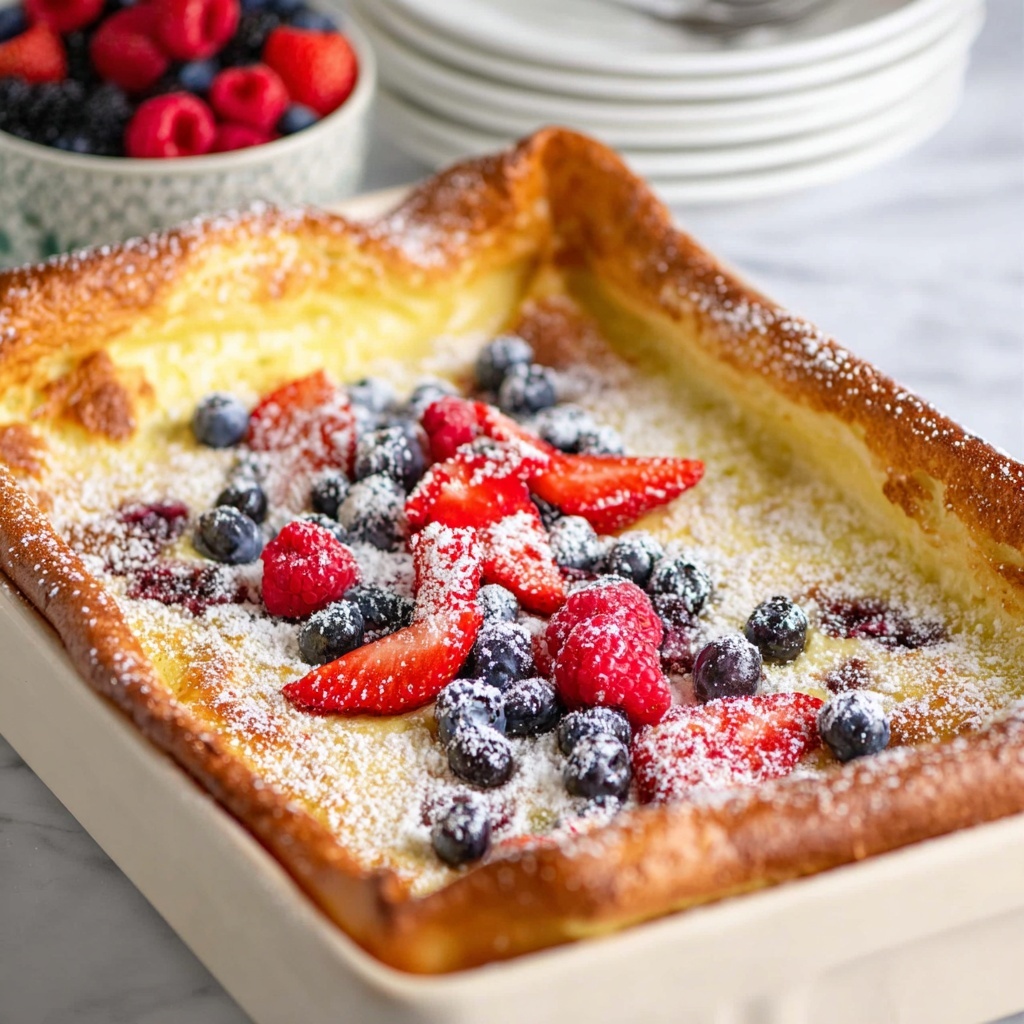
Return your dish to the oven and bake for about 20 to 25 minutes. During this time, watch as your pancake grows and browns into a stunning golden masterpiece with irresistibly crispy edges. Avoid opening the oven door too early to maintain the heat and let it puff perfectly.
Step 6: Dust with Powdered Sugar
Once your German pancake is golden and puffed, take it out and generously dust the top with powdered sugar. This gives it a subtle sweetness and a picture-perfect finish that’s almost too pretty to eat, but trust me, you won’t want to wait.
Step 7: Slice and Serve Immediately
Slice into generous wedges and serve hot. Top with fresh berries or drizzle with maple syrup if you like a fruity or maple-sweet contrast. This dish is best enjoyed right away while the edges are crisp and the center is soft and tender.
How to Serve German Pancakes Recipe
Garnishes
Powdered sugar is the classic go-to garnish, lending a light sweetness and pretty dusting. But don’t stop there—sprinkle fresh berries, add a dollop of whipped cream, or scatter some lemon zest over the top to brighten the flavors and add a pop of color.
Side Dishes
German pancakes shine as a centerpiece but also pair beautifully with a variety of sides. Consider serving with crispy bacon, fresh fruit salad, or creamy yogurt to add balance and variety to your breakfast plate.
Creative Ways to Present
For a fun twist, try folding slices of the German pancake into quarters and stacking them like little pastries, topping each with a berry and a drizzle of syrup. Alternatively, serve it alongside a small pitcher of warm maple syrup or fruit compote for guests to pour themselves and add interactive charm to your meal.
Make Ahead and Storage
Storing Leftovers
If you have leftovers (though that’s rare!), store them in an airtight container in the refrigerator for up to two days. The pancake tends to softens, so consider reheating to bring back a bit of crispness.
Freezing
German pancakes don’t freeze particularly well due to their delicate texture, so it’s best to enjoy them fresh. That said, if you must freeze, wrap slices tightly in plastic wrap and store in a freezer-safe container for up to a month—but expect a change in texture.
Reheating
To reheat, place leftover slices on a baking sheet and warm in a 350°F oven for about 5-7 minutes. This helps revive some of the crispy edges. Avoid the microwave if you want to keep the texture nice and fresh.
FAQs
Can I make this German Pancakes Recipe gluten-free?
Absolutely! Substitute the all-purpose flour for a gluten-free blend that measures cup for cup. Just make sure the blend includes a binding agent like xanthan gum to keep the texture right.
What’s the difference between German pancakes and regular pancakes?
German pancakes—sometimes called Dutch babies—are baked in the oven and puff up dramatically with crispy edges and a custard-like center. Regular pancakes are griddled on a stove and tend to be flat and fluffy.
Can I prepare the batter the night before?
It’s best to make the batter fresh right before baking so it rises and puffs properly. However, you can mix the dry ingredients in advance to save time in the morning.
Why does my German pancake deflate after baking?
It’s totally normal! The dramatic puff you see is due to air and steam; it will gently deflate as it cools. Enjoy it right out of the oven for the best texture.
Can I add flavors or spices to the batter?
Definitely! Experiment with a pinch of cinnamon, nutmeg, or even citrus zest in the batter to add a personal touch to your German pancakes. Just a small amount enhances the flavor without overpowering the classic taste.
Final Thoughts
There’s something wonderfully satisfying about making and sharing this German Pancakes Recipe with the people you love. It’s a recipe that looks like you put in a ton of effort but comes together with surprising ease. Whether you’re treating yourself or hosting a brunch, this dish is bound to become a fast favorite. So go ahead, turn on that oven and start blending your way to breakfast perfection!